
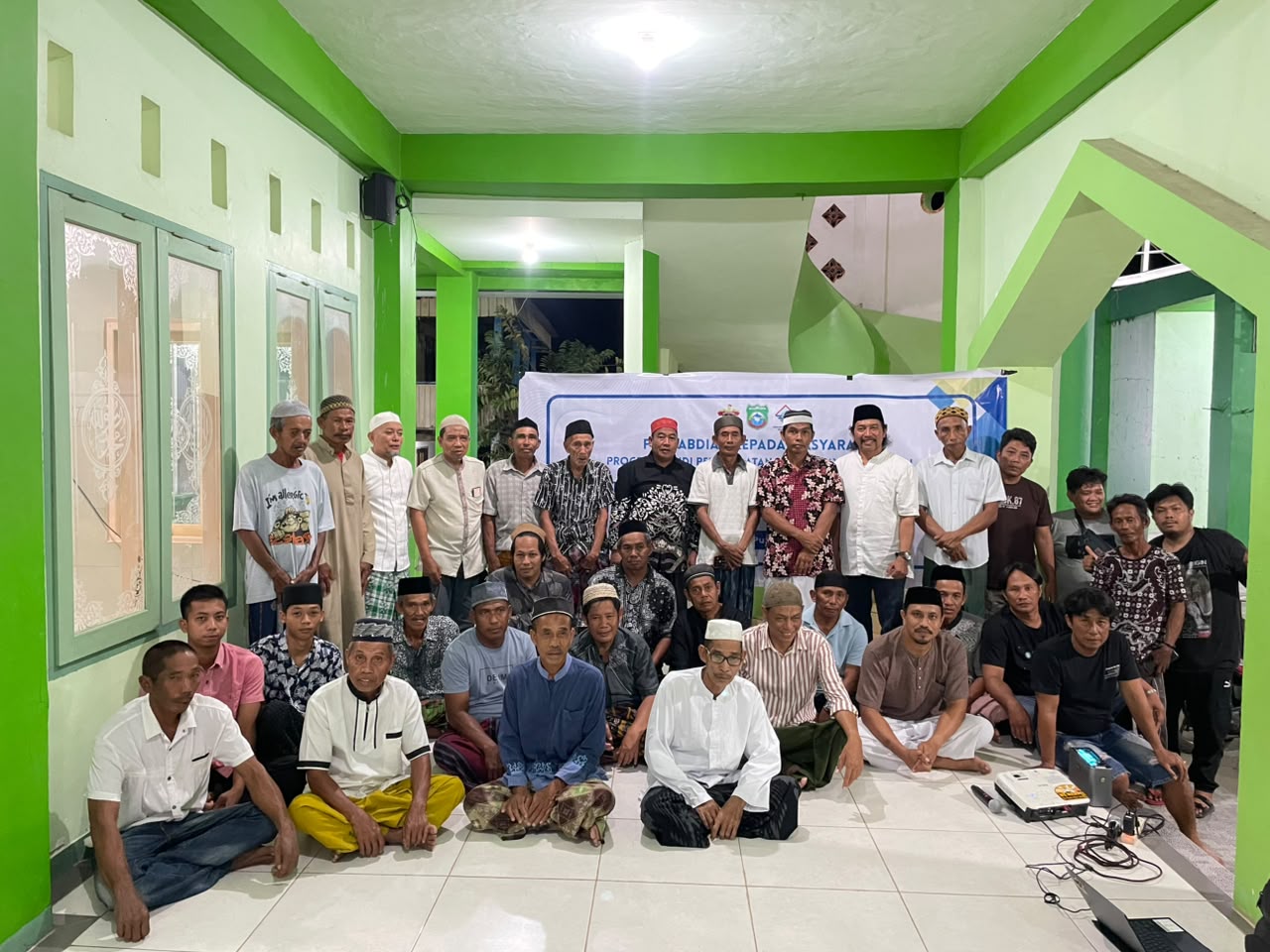
Salemo Island, July 25, 2026 — Habitat Rumah Kepiting Rajungan (HARUKA) Team from the Capture Fisheries Study Program, Faculty of Marine Science and Fisheries, Hasanuddin University, conducted a socialization program for fishers and residents of Salemo Island. The activity aimed to increase public understanding of the benefits and functions of HARUKA and to emphasize the importance of fish habitat conservation areas in supporting the sustainability of blue swimming crab resources in the waters surrounding Salemo Island. The socialization program was carried out as part of the series of activities related to the installation of the HARUKA prototype, which took place from July 24–26, 2026. The event featured two keynote speakers, M. Abduh Ibnu Hajar, S.Pi., M.Sc., Ph.D. and Prof. Dr. Ir. Najamuddin, M.Sc., who delivered presentations on blue swimming crab resource conservation, coastal habitat management, and the role of local communities in maintaining sustainable blue swimming crab fisheries.
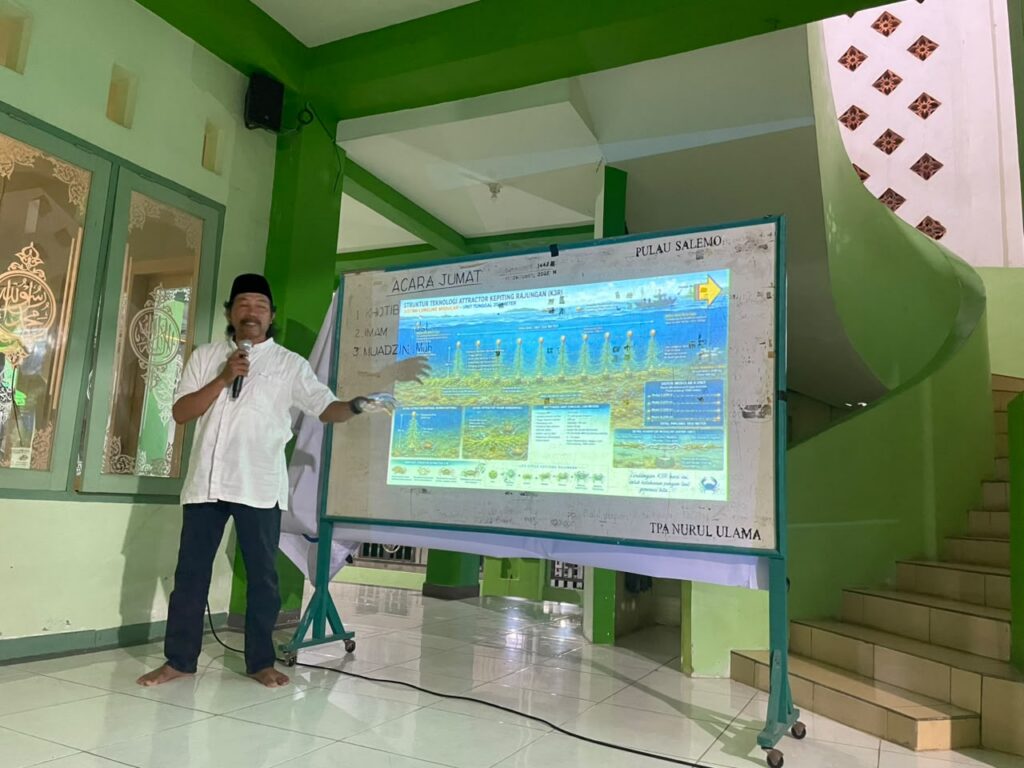
In his presentation, M. Abduh Ibnu Hajar explained that HARUKA was designed as an artificial habitat that provides shelter for blue swimming crabs from environmental stressors and natural predators. The habitat is expected to support the growth and survival of blue swimming crabs, thereby helping to maintain sustainable crab stocks in the waters of Salemo Island. Meanwhile, Prof. Dr. Ir. Najamuddin emphasized the importance of fish habitat conservation areas as part of an ecosystem-based fisheries management strategy. According to him, habitat protection is one of the key elements in maintaining the ecological balance of coastal ecosystems and ensuring the long-term sustainability of blue swimming crab fisheries, which constitute an important source of livelihood for local fishing communities.
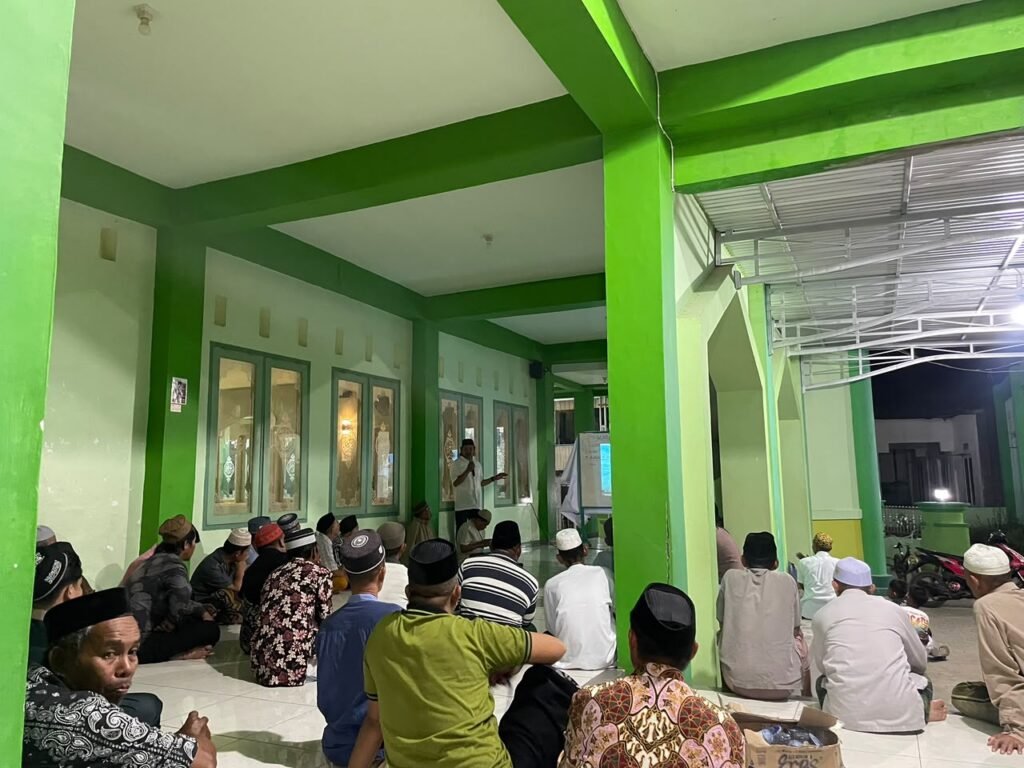
The socialization activity was conducted in an interactive manner and involved fishers and residents of Salemo Island. Participants actively engaged in discussions regarding the current condition of blue swimming crab resources, challenges faced by fishers, and collective actions that could be taken to protect crab habitats in coastal waters. The enthusiasm shown by participants reflected the community’s strong concern for the sustainability of fisheries resources on Salemo Island.
Through this activity, the HARUKA Team hopes to strengthen collaboration among academics, fishers, and local communities in supporting sustainable and conservation-based blue swimming crab fisheries management. The program also serves as an initial step toward building shared awareness regarding the importance of conserving blue swimming crab habitats as both ecological and economic assets for Salemo Island. The Capture Fisheries Study Program of Hasanuddin University remains committed to developing research-based innovations and community engagement activities that provide tangible benefits for the conservation of coastal resources and the improvement of fishers’ livelihoods.